Why the Best CMS for SEO Matters More in 2026 ?
Recent Posts
No Content Available
Did you know: Your website could be losing visitors even before they get to your content? When websites are too slow to load or difficult to navigate on mobile, visitors don’t think twice before leaving your site.
Your Website’s Foundation Matters More Than You Think
What are the more common reasons that present websites are facing, such as a bounce rate? Is your website not doing well? Has it nothing to do with design or content, and is it the ux or ui? In 2026, websites are assessed in seconds, users notice the content in seconds, and get rejected, sometimes even before the visitor has a chance to scroll.
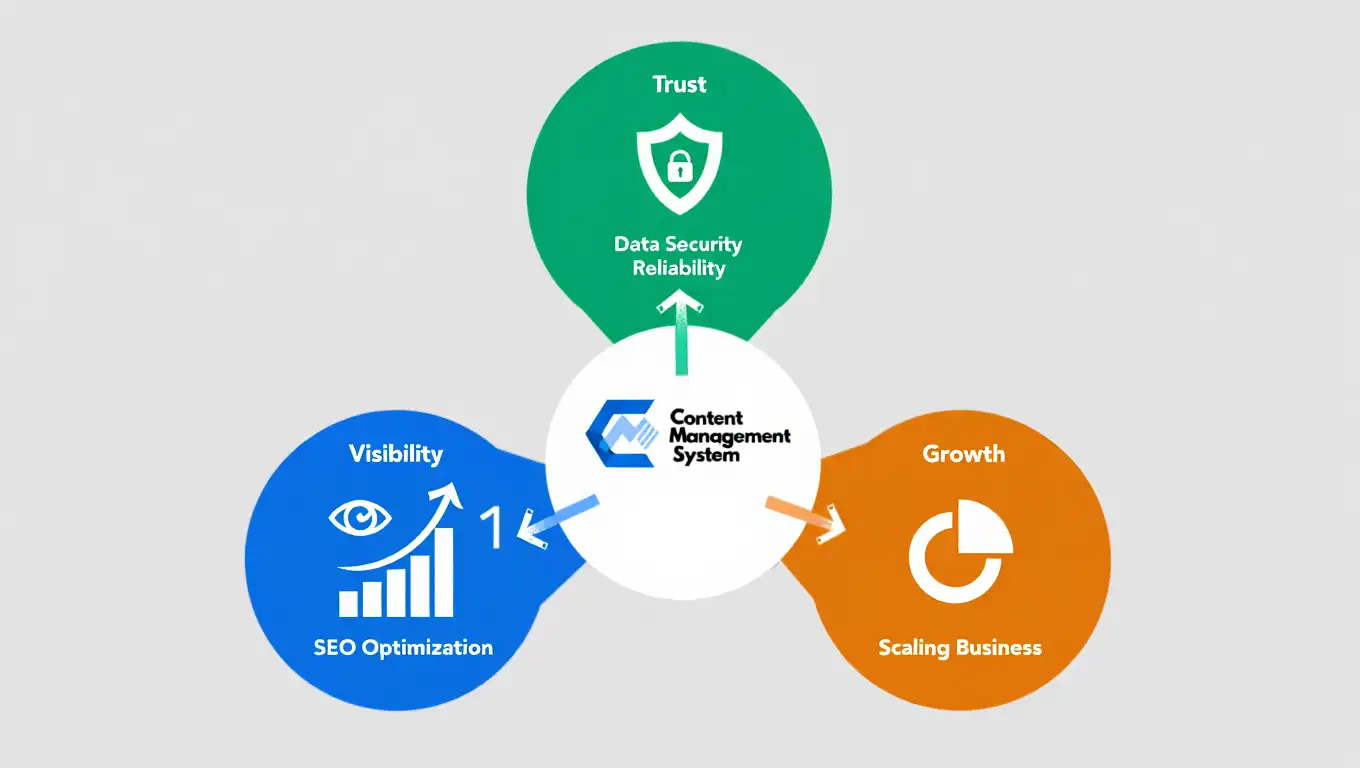
The next points are loading of the website, which includes Speed, functionality, and usability, which are now what keep visitors or send them packing. With increasing competition in every sector, every business has its own website promotion nowadays, and that gives them conversions. The environment that controls your website determines the speed of page loads, the fluidity of content updates, and the ability to meet new demands. Most entrepreneurs concentrate on the level of changes, while the constraints lie beneath. Selecting the correct foundation is no longer a technical issue but a business issue. The platform that you currently depend on will subtly affect visibility, trust, and growth in the future.
Why Your CMS Plays a Bigger Role Than You Realize
Technical foundation:
A good CMS should support necessary background operations like clean page hierarchy, correct indexing paths, and proper crawling for search engines. By taking care of the basics automatically, your website will avoid many hidden problems that can gradually reduce its visibility and performance.
User experience signals:
Contemporary ranking algorithms focus heavily on the user experience of a website. Loading quickly is one of the best and quickest options to attract your target audiences, and logically pleasing experiences all begin at the CMS level. A CMS that is built with performance in mind will help to create experiences that are seamless, rather than frustrating.
Growth readiness:
The website will get more traffic when the number of users increases, and for that, we have to use more content. CMS has to be able to handle the increased content without errors and server issues to manage. Some CMSs, such as Drupal, are designed to handle complex structures and large amounts of content without any issues, while others, such as companies like a WordPress, help businesses to easily arrange content when properly managed and without any mixing. A CMS that grows with your business will not be held back by limitations in the future.
Key Features That Make a CMS SEO-Ready in 2026
1. Performance and Load Speed Control
- Pages should load in 2-3 seconds.
- The faster the speed, the lower the bounce rate
- Improves user experience and search engine rankings
2. Mobile Experience and Responsiveness
- More than 70% of visitors come from mobile devices.
- Layouts need to accommodate all screen sizes.
- Ease of navigation ensures that users remain engaged.
3. Content Structure and URL Management
- Clean and readable URLs
- Organized page structure
- Improved crawlability for search engines
4. Flexibility for Ongoing Content Updates
- Encourages regular updates (2-4 times)
- Keeps the website fresh and relevant
- Improved crawlability for search engines
5. Scalability for Future Expansion
- Handles growth from small sites to 500+ pages
- Supports stability with increasing content
- Enables long-term business growth
Pros & Cons of Popular CMS Platforms (2026)
| CMS Platform | Pros | Cons |
|---|---|---|
| WordPress | Easy to use for non-technical users, flexible content management, strong support for marketing and blogs, large ecosystem for extensions | Can become slow if poorly managed, needs regular updates, security depends on maintenance |
| Shopify | Simple setup for online stores, stable performance, mobile-ready by default, minimal technical effort required | Limited customization flexibility, less control over backend structure, higher costs as store grows |
| Drupal | Strong content structure, excellent for large and complex websites, high stability, scalable for long-term growth | Steep learning curve, requires technical expertise, higher development and maintenance effort |
| Joomla | Balanced control and flexibility, good content organization, solid security features | Smaller extension ecosystem, moderate learning curve, less beginner-friendly than WordPress |
| Wix | Very easy to use, fast setup, visual editor for quick changes, good for simple sites | Limited scalability, less control over advanced structure, not ideal for growing or complex websites |
Top CMS Platforms and How They Support SEO Goals
WordPress
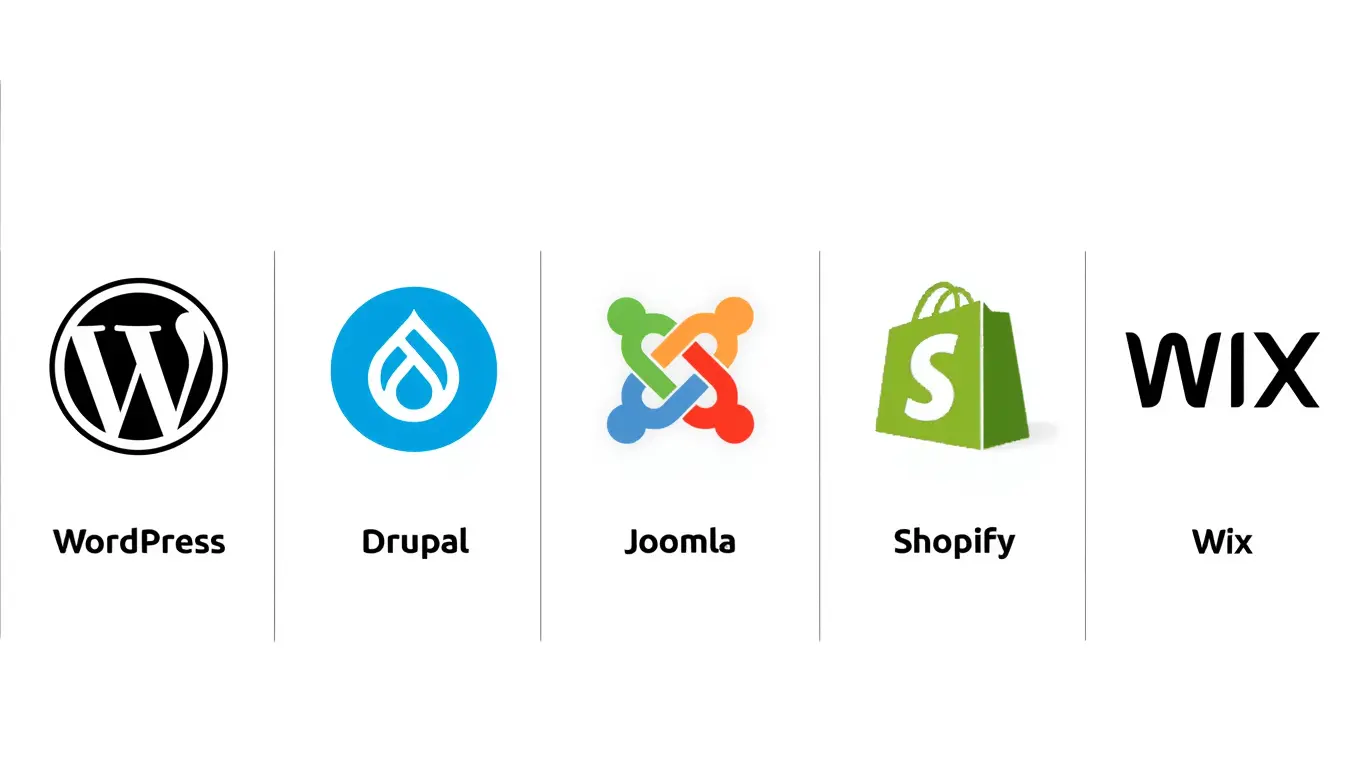
WordPress is one of the most used cms platforms in the world, a sought-after platform for businesses as it offers ease of use and flexibility. It helps teams handle content without any technical issues and also supports marketing and content development. It is flexible enough to be used for small businesses as well as growing businesses.
- Easy and rapid content updates
- A large number of plugins are available to meet optimization requirements
- Flexible themes for various sectors
- High levels of support for content marketing and blogging
Shopify
Shopify is an e-commerce solution that is specifically for those who have more products and find it easier to handle the site. It is optimised for performance and ease of management. It takes away the technicalities involved in running an online store, allowing the owner to concentrate on the products and sales.
- Clean structure designed for e-commerce sales
- Consistent performance and fast loading
- Mobile-friendly storefronts by default
- Easy product and store management
Drupal
Drupal is a good option for those who have large and heavy businesses to handle. Content-wise, it is a good choice for large-scale websites that need a strict content structure and control. Drupal is often used by organisations that handle a large amount of content and have multiple user roles.
- Sophisticated content organisation functionalities
- Specific user roles and permissions
- Manages complex and content-rich websites
- Scalable and reliable performance
Joomla
Joomla provides a balanced solution for businesses that require more control than what is offered in basic platforms but do not require extreme complexity. It offers organized content management with flexibility.
- Good balance between flexibility and control
- Structured Content and Menu Management
- Strong security features
- Ideal for medium-sized websites
Wix
Wix is a user-friendly website builder that is designed for small businesses, and it is like adding elements to fix the site design and control the whole site using the same tools that individuals who want to create a website quickly. It is designed for visual editing and is very easy to manage the whole site’s elements, and even for people who do not have any experience, they can quickly adapt to this Wix website.
- Drag-and-drop visual editor
- Fast setup for simple websites
- Basic optimization capabilities that come with the product
- Easy to use for non-technical users
Final Thoughts:
In 2026, the system that powers and controls your brand is like using the proper website that, if you are not interested in the code, you can use the cms that ranks on the google by using the your website becomes far more important than most companies currently understand. A CMS is more than just a page management system and updating the content manually, and it apperain the backend and frontend, it influences speed, architecture, usability, and the ability to scale your website. When the system is running in an optimal fashion, teams can concentrate on content, customers, and strategy rather than repairs. When it doesn’t, even the smallest changes will begin to hinder momentum.
FAQs
1. Is CMS choice still important in 2026?
Yes. As search engines begin to concentrate on experience and performance, the system that is running the site becomes more important than ever before.
2. Can a CMS affect website growth speed?
Absolutely. A flexible and efficient platform enables faster updates, faster experimentation, and easier scaling.
3. Should small businesses rethink their CMS?
If the updates each day seem like a challenge or the performance is not as it should be, it may be necessary to assess if the current system still fits.
4. Is switching CMS risky for search visibility?
It can be if it is done poorly. With proper planning and preservation of structure, transitions can be managed safely.
5. How often should a business review its CMS choice?
A review of the platform every few years can help gauge and set some goals to improve their target that the platform is still in line with goals, growth, and expectations.