
Free website Templates, Cheap- damage your Reputation

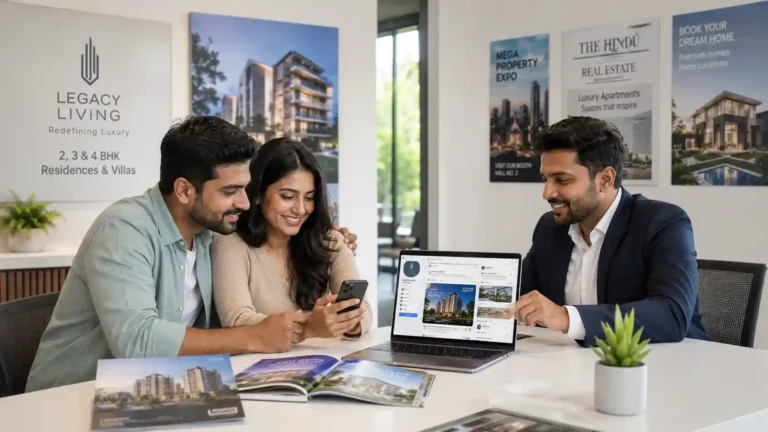
Something different about this is that real estate sales change very quickly. The reason for this is that -enough developers count mainly on newspaper announcements, external hoardings and veridical demesne expos. When you run into issues, these methods still exist, but they no longer produce the same force. Importantly, Buyers pass more time online Today. What’s interesting here is that you equate making, watching videos, interpreting comments, and checking social media before making a determination.
Basically, in 2026, the marketing of real land brands is about the sale of trapping or villas. It is about progressing. Purchasers want to know who the developer is, what the brand represents, and how previous tasks have been completed, helping to make the application easier.
Competition is increasing. Each manufacturer is online. Something different about this is that each project has social media pages. One approach is that, for this reason, only developers with strong and chic marketing strategies welcome serious buyers’ attention.
In simple terms, create certainty before the sale of real estate. What stands out is that most buyers do not establish real Demesne decisions speedily. It’s worth noting that buying a plate is emotionally and financially expensive. Citizens need confidence before investing their savings, allowing them to access more ideas.
In simple terms, a company’s real estate the vendors get a feeling from a traditional stall of protection. When developers incessantly share. This is a quality piece of work: this confidence has a direct impact on product genesis and dispersion.
This is useful because many successful developers in 2026 focus more on reputation building than aggressive activities, enabling immediate implementation. You understand a bare fact. Citizenry buy brands they spot.
The cool component is that short-term campaigns can generate temporary leaders, but branding produces long-term recognition. You’ll enjoy that developers who invest in brand identity remain unforgettable in the marketplace for Years.
Here’s what you should know: Mod real estate brands progress identities through coloration, intention styles, social sounds and customer experiences. Some focus on luxury liveliness. You know what? This is effortlessly simple: others highlight or smart plates. Oh, and the key point is that this specialization helps developers to stand out from overcrowded competitions. The neat part is that brand merchandising is no longer optional. It’s become a strategy.
Unlike other options, short-term videos are one of the main reasons for increased commitment to real land selling. Put simply, editors now spend more time watching fast real estate videos than translating long labour descriptions. This is brilliantly run, platforms such as Instagram Reels, YouTube Shorts, and Facebook videos help developers reach butt groups more tightly.
Here are some proven video merchandising bits developers should consider in 2026:
| Video Marketing Trend | Real Numbers |
|---|---|
| Businesses using video marketing | 91% of businesses use video marketing |
| Marketers getting ROI from video | 93% report positive ROI from video |
| Consumers prefer short videos | Over 70% prefer short-form videos |
| Buyers using videos before purchase | 90% say videos help buying decisions |
| Mobile video consumption | 75% of video views happen on mobile |
| Brands are seeing better engagement with video | 87% say video increases traffic and leads |
The cool component is that professional film pictures are still mouthful, but the public now prefers realistic existing estate visits. What it comes down to is the script-overs, phonation statements, and real-world experiences of the site create a stronger relationship with the public.
Worth noting: developers apply drones to present the scope of the project and the surrounding base. This yields Emptor, Video marketing is becoming one of the most powerful tools for the visibility of real Demesne marques.
Social media plays a crucial role for real estate businesses since it improves visibility, establishes trust, and delivers quality leads at a reduced price compared to conventional advertising.
At present, clients find agents on social media before getting in touch with them. According to some reports, 77% of real estate agents make use of social media to attract followers and build community. In other words, your target audience will expect you to maintain an active online presence and update daily with content.
Additionally, having a consistent brand message and following the same theme and template content posting schedule enhances trustworthiness among your followers and maintains visibility in the industry. As people come across your content regularly, they learn to trust your brand.
People interact with people rather than brands in 2026. Many successful founders are appearing on LinkedIn, Instagram, and YouTube to show their life journey, treating it like a trust-building exercise rather than a self-promotion exercise.
These developers provide their opinion about the industry, updates on projects, information about the market, and additional insight into the work process.
The result is transparency that increases trust. When buyers see the face of the founder regularly, the brand becomes more authentic. Personal branding is particularly useful for small developers who have to compete with big real estate companies.
Brands usually appear inanimate objects. However, buyers want brands to be more personal and more humane. The founders show their team, engineers, architects, interactions with customers, and activity on the construction sites. Thus, developers can create a more personal relationship. Not only buildings but also lifestyle stories become the focus of promotion.
Hyperlocal marketing is proving to be one of the most efficient real estate marketing trends in 2026. The reason being, rather than targeting generic demographics, they are focusing on location-based prospects, who are easier to turn into buyers.
It is getting harder for companies to handle leads manually. Automation tools can help to increase response rate and improve customer communication and we can track the data of the users’ behavior.
Chatbots powered by AI can reply to the inquiries of potential buyers immediately. Systems can send project booklets, arrange tours and make follow-ups. It is really important to be fast because the first to react always gets the best chances for conversion in the real estate business. Buyers typically contact several companies simultaneously.
Traditional marketing campaigns don’t work anymore. Customers demand an individual approach according to their preferences and needs. Customer data is used by real estate developers to send customized offers, payment plans and information about locations. Thus, customers receive an offer that is relevant to them of the property or showing the amenities. Automation is not a replacement for personal interaction, it helps the 24/7 interaction of the users connection. It makes the work easier and quicker.
The brands in the real estate sector are increasingly working with local influencers and content creators. This approach makes it easier for developers to target customers. Consumers believe in trusted creators, whose work is perceived differently from typical ads.
Lifestyle influencers, real estate vloggers, and local city influencers play an increasingly important role in marketing collaborations with developers. In the modern era, consumers hate to be bombarded with sales messages. They want to visualize the lifestyle associated with the product or real estate asset.
Marketing approaches of developers include cafes, fitness places, nature scenery, fun places nearby, and daily activities. These kinds of stories create emotional value and make it possible for buyers to envision their life in such a community. Lifestyle marketing is proving much more effective than conventional property marketing.
Advertising in real estate is becoming a more useful skill in the market, and that gives you an instant rank on Google. Today, developers don’t target their audiences indiscriminately anymore. Targeting strategies are based on the interests, demographics, and online behaviour of the audience, as well as other factors.
Google and Meta allow developers to benefit from advanced targeting capabilities that contribute to improved leads. It saves resources and improves the return on investments.
In the past, developers were interested primarily in the volume of leads; now, they have changed. Instead of getting the junk leads, they are focusing on the quality. But in 2026, what matters is not the number but how many are converted from those leads. Nowadays, marketers track website visits, booking intent, customer interaction, and real conversion rates, and not just leads. It allows companies to identify campaigns that bring profits. Analytics plays an important role in real estate brand marketing today.
Marketing real estate will be even more about the client of the future, like how they respond to their customers. Consumers will demand fast responses, engaging digital tools, and clear brand engagements on online. Virtual home tours, artificial intelligence-driven solutions, AI-generated images of the properties, and interactivity might become common tools sooner rather than later.
Meanwhile, human trust will remain key. While technology is likely to streamline marketing processes, branding and customer experience will always be crucial factors; so that they trust in what they visualize and enquire about the brand and land details. Early adopters of new trends will appreciate an an advantage in the industry. Those brands that resist digital transformation will find themselves struggling with competitors in the years to come.
Marketing of real estate brands in 2026 is experiencing rapid change. The sole reliance on conventional advertisement will not work in reaching out to contemporary consumers. There is a need for more effective branding, digital marketing techniques, and relationship building with customers. Short-form videos, personal branding, localized marketing, automation, influencer marketing and community marketing are some areas that are driving this industry forward.
The most important thing is to remember that the trend that can be noted is that today, buyers do not buy properties based on brochures and advertisements; they have to feel they’re trustworthy types. Instead, they consider trustworthiness, reputation, visibility online, and brand experience. This means that real estate developers who focus on building relationships with their audience will be well placed.

we help create the brand experiences of the future through a creative culture rooted in entrepreneurship and partner collaboration.
Address
407, 2nd Main Rd, B Channasandra, Kasturi Nagar, Bengaluru, Karnataka 560043
Phone




© 2026 Kleverway, Bangalore.
WhatsApp us
