Why Is Content Marketing Important for Real Estate Brands in 2026?
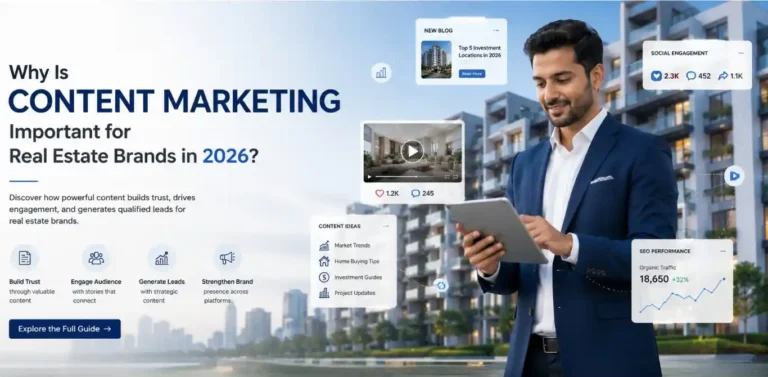
In 2026, the buyer for property does not make a decision based on one ad. The comparison is done between properties, the brand is checked out, insights are researched, and weeks are spent reading the internet before asking for anything more than that.
Real estate organizations have not changed much, and most of them still believe in the power of promotion alone. But today, interest comes from the power of information. One of the best strategies adopted by real estate companies today is content marketing. This is because of the fact that buyers today do not want to buy without being educated first.
This is where strong content creates a difference.
Rather than chasing leads on a daily basis, today’s wise developers are creating digital authority through blogging, videography, social media education, local SEO content, and buyer-driven campaigns. Not only does this strategy make one more visible on Google, but it also builds credibility in all digital spaces. Content is working wonders for Real Estate Brands by acting as a sales asset that keeps generating traffic, leads, and engagement for months on end with just one piece of quality content.
The biggest change of 2026 comes down to something simple. Buyers do not trust brands that are merely selling them products; they trust brands that have been educating them about relevant topics online.
How Content Marketing Helps Real Estate Companies Generate Better Leads
Many real estate companies still rely fully on paid advertising to generate leads. The catch is that the minute the money stops flowing in, so does the advertising. Content marketing operates on an entirely different basis. It continues generating new customers through search engines, social media, and word-of-mouth.
These days, customers do their homework before clicking on that “Send Inquiry” button. They weigh up the options, look at locations, study reviews, and view video presentations before making a choice. It is precisely for this reason that content marketing has become a key growth strategy for Real Estate Brands.
- Boosts the visibility of projects on Google..
- Establishes trust before the sales team reaches out to the buyer.
- Aids projects in ranking for location-based keywords.
- Drives website traffic not relying solely on pay-per-click advertising..
- Builds long-term brand authority in the market.
- Educates buyers while they are making their decisions.
- Assists social media marketing efforts with relevant information.
- Allows developers to articulate the value of the projects.
- Provides better quality leads than random PPC leads.
- Boosts engagement on YouTube, Instagram, and LinkedIn.
- Builds credibility through the use of market insights and investment education.
- Enhances the performance of retargeting campaigns.
- Enables sales teams to close leads quickly through education.
- Offers several entry points for potential buyers online
Content Types That Are Driving Real Estate Marketing Results in 2026
Unlike other options, short-term videos are one of the main reasons for increased commitment to real land selling. Put simply, editors now spend more time watching fast real estate videos than translating long labour descriptions. This is brilliantly run, platforms such as Instagram Reels, YouTube Shorts, and Facebook videos help developers reach butt groups more tightly.
Here are some proven video merchandising bits developers should consider in 2026:
| Content Type | Purpose | How It Helps Property Businesses |
|---|---|---|
| Location Guide Articles | Educate buyers about the area | Improves local SEO and attracts high-intent traffic |
| Investment Blogs | Build buyer confidence | Helps investors understand future growth potential |
| Project Walkthrough Videos | Showcase projects visually | Increases engagement and inquiry rates |
| Construction Update Content | Build transparency | Improves trust with existing and new buyers |
| Market Trend Reports | Share industry insights | Positions the company as an authority |
| FAQ-Based Content | Answer buyer questions | Reduces hesitation during decision-making |
| Social Media Reels | Improve reach and visibility | Generates faster engagement across platforms |
| Comparison Content | Compare locations or projects | Helps buyers evaluate options clearly |
Why Buyers Trust Informative Real Estate Content More Than Advertisements
In today’s world, people are bombarded with thousands of real estate ads daily. In light of this fact, traditional marketing alone does not make much impact anymore. Consumers conduct a lot of research on the Internet prior to getting in touch with the selling team. They read blogs, analyze locations, watch videos about projects, and look for information on investments to determine if a developer can be trusted. Informational content allows a business to stand out at the research stage and gain credibility among customers. In addition, it helps generate leads since consumers have some knowledge about the project even before contacting the company.
Key Numbers Showing the Growth of Content Marketing in Real Estate
- Around 80% of property buyers now research projects online before contacting sales teams
- Businesses using SEO-driven content generate nearly 3x more long-term website traffic
- Video-based property content increases engagement rates by more than 60%
- Location-focused blogs help improve local keyword visibility significantly
- Buyers spend nearly 2x more time on websites with educational content
- Email campaigns supported by informative content improve lead nurturing performance
- Consistent blogging can increase organic traffic within 6 to 12 months of the website ranking.
- More real estate industry in 2026 are shifting budgets from traditional ads toward long-term content strategies for sustainable digital growth
Why Content Strategy Is Becoming a Long-Term Asset for Property Businesses
For example, in 2026, there will be fierce competition in the digital space within the property sector. Most developers will be investing heavily in advertising; however, very few will be establishing their visibility on the web in the long run. Here, the power of content marketing becomes significant. While conventional advertising generates buyers’ temporary attention, information-based content engages prospective buyers through Google searches, social media platforms, and video-sharing sites over months and even years. Today’s buyers seek answers first and calls later.
Before considering a specific property or engaging with a developer, buyers search for investments, advantages, price ranges, laws, and growth prospects. Companies that regularly create valuable content remain relevant to buyers through their entire journey of the real estate process. In the end, this contributes to increased brand authority, organic leads, decreased reliance on costly advertising campaigns, and an overall improved web presence.
Conclusion
Content marketing is no longer confined to branding within the real estate industry. By 2026, content marketing will have emerged as one of the most powerful digital marketing strategies for builders, developers, and property organizations looking to engage serious buyers through their online marketing efforts. Today’s audience does not believe in promotional efforts alone. They want companies that provide valuable information and show real examples of the content, insights, and educational resources throughout the buyer’s journey.
Content marketing has become a key component of digital marketing today, from optimizing visibility on Google to creating higher-quality leads and following the Google algorithms. Blogs, videos, SEO content, and social media education are all combined to create a powerful online presence in competitive spaces. Companies that are only relying on advertisements are having difficulty generating higher-quality leads, and this will increase costs.