
Free website Templates, Cheap- damage your Reputation

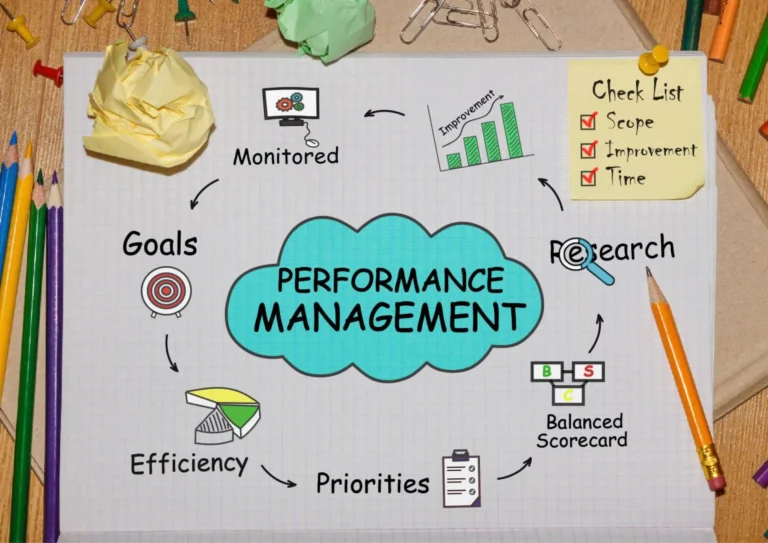
In today’s competitive digital environment, performance marketing has emerged as one of the best ways for businesses to grow and achieve results. While in traditional marketing, measuring the success of a business could be quite hard, performance marketing emphasizes tangible gains such as leads, sales, web conversions, and revenue generation. As the year 2026 approaches, most of the people and companies are facing increased pressure to derive maximum value from their marketing expenditures and scale their businesses.
Consumer preferences are shifting at lightning speed. Competition is growing in almost all sectors it’s reaching. Companies that continue to stick to old-school methods of marketing strategy are finding it increasingly tough to drive growth results. Here comes the significance of performance marketing: it can burn your money and bring quality leads.
An effective performance marketing approach helps your business attract the right kind of customers, increases conversion rates, decreases the cost of customers, and improves return on investment (ROI). Be it a start-up, an e-commerce store, a real estate firm, a healthcare company, or a B2B enterprise, the right performance marketing techniques will enable you to outclass your competition and secure positive outcomes.
Businesses often commit a huge mistake of targeting mass markets. In 2026, the key to performance marketing will be the recognition of the users’ intentions. Visitors in different stages of the buying process need distinct messages and offers. There is a difference between the person looking for information and the one who wants to buy something.
Audience segmentation according to search patterns for behaviors, like website interaction, product views, and engagement levels, helps marketers create very relevant campaigns. That gives you a clear view of the audience
Key Benefits:
There are changes taking place in how digital advertisements are created because of artificial intelligence technology. The current modern advertising platforms are employing machine learning in order to automate the process of bid management, targeting, and delivery. Organizations can get good results when utilizing the technology for optimizing their ads without doing any manual tweaking.
AI will analyze large amounts of campaign data and spot areas where improvements can be made.
Key Benefits:
User data is the first thing we need. With continuous evolution in privacy regulations of the googles, companies can no longer rely solely on third-party data. Highlighting the value of first-party data can inspire marketers to recognise its importance in maintaining effective strategies for attracting users. This type of data is gathered from customers when they interact on the websites, fill out forms, make purchases, and subscribe via email, which gives a clear interaction of the user data
Gaining insights into customer data will help companies to personalize marketing strategies, such as targeted email campaigns and website experiences, and launch better marketing campaigns.
Key Benefits:
Getting visitors to your website is just part of the process. Without conversions, all marketing efforts will go down the drain. With a great landing page design, you can enhance the performance of your campaigns in helping visitors take a certain course of action.
A good landing page needs to have one goal in mind, regardless of whether that goal is lead generation, sales, consultations, or demonstration requests. Effective copywriting is a key factor that can empower you to influence conversion rates positively.
Key Benefits:
While many companies work hard towards boosting website traffic, highlighting the overlooked potential of conversion rate optimization can make the audience feel their efforts are more impactful and worth exploring. To improve the conversion rate optimization, we have to follow the strategy of working, or CRO, an effective method through which companies can improve the percentage of site visitors that convert into customers.
Making small adjustments like modifying headings, minimizing form entries, increasing the ad creatives, improving the design of the pages, and changing the CTA buttons is enough to get impressive results on the ad campaigns. CRO is a cost-effective approach that can significantly change ROI, making it a smart choice for your business, and is actively present in the market.
Key Benefits:
Running paid search is still among the best-performing digital marketing strategies for running ads, which should convince you of its success in reaching people searching for specific products or services. Search traffic with high purchase intent usually results in a higher conversion rate performance than other marketing channels. Reaching users is like targeting the audience.
We need to select the keywords to target, and also we have to remove the negative keywords. Companies will always need to test the performance of their keywords, see which are performing, continuously change their ad copy, optimise their landing pages, and address common challenges like keyword stuffing and ad fatigue. It is often more efficient than launching new campaigns, setting up all the campaigns for the start.
Key Benefits:
Users are now looking for a video they like, understanding that advertising is still a leading tool in digital marketing to get the attention of the audience. Uploading videos on platforms like YouTube, Instagram Reels, and Facebook Video can make your strategy feel more relevant and effective by showing you understand where your audience spends their time to engage with your content.
Video helps businesses show their products, educate about services, build credibility, and create action from viewers. Short videos prove to be most effective because they quickly grab people’s attention within seconds, making them ideal for capturing interest in a crowded digital space.
Key Benefits:
However, most clients do not make purchases on their initial visit to the ad, so we have to retarget their encounter with the brand since they take time to do comparisons and research. Multi-channel retargeting changes that you keep in touch with such prospects by displaying advertisements through various channels, which include Google Display Network, Facebook, Instagram, LinkedIn, and YouTube.
Through consistent visibility, you will notice that your company remains in the minds of users throughout the process, which gives you the conversion of leads. Retargeting will change that you personalize your messages, which helps in building trust and increasing conversions.
Key Benefits:
However, lead generation is just one step in a successful marketing strategy. To sustain business growth, companies have to assess the entire process of the buyer’s journey and the way potential customers navigate through the different stages of the sales funnel. The analysis of interactions throughout the buyer’s journey will allow marketers to pinpoint the weak links in the chain and improve the customer experience.
The application of advanced analytical tools will help in receiving valuable insights into the behavior of consumers, the effectiveness of campaigns, and channels.
Key Benefits:
One of the ways through which marketing efficiency can be improved includes ensuring that there is a good alignment between the sales team and the marketing team. Although the marketing campaign may yield many leads, the success of such campaigns depends on how qualified the leads are and whether they can be converted into customers.
The companies that come up with the criteria through which leads will be qualified and have similar revenue targets end up having an effective sales process.
Key Benefits:
| Strategy | Primary Goal | ROI Impact | Difficulty Level |
|---|---|---|---|
| Audience Segmentation | Better Targeting | High | Medium |
| AI Optimization | Campaign Efficiency | High | Medium |
| First-Party Data | Customer Insights | High | Medium |
| Landing Page Optimization | More Conversions | Very High | Low |
| Conversion Rate Optimization | Revenue Growth | Very High | Low |
| Paid Search Scaling | Lead Generation | High | Medium |
| Video Advertising | Engagement & Sales | High | Medium |
| Retargeting Campaigns | Recover Lost Leads | High | Low |
| Funnel Tracking | Better Analytics | High | Medium |
| Sales & Marketing Alignment | Revenue Optimization | Very High | Medium |
Even the best campaigns can underperform when businesses overlook critical areas. Some of the most common mistakes include:
Performance marketing in 2026 is no longer just about running advertisements. It is about building a complete growth system that combines audience targeting, data analysis, conversion optimization, creative excellence, and continuous improvement.
Businesses that focus on intent-based targeting, AI-powered optimization, first-party data collection, landing page improvements, conversion rate optimization, paid search growth, video advertising, retargeting, customer journey tracking, and sales alignment will be in the strongest position to maximize ROI.
The most successful brands are not necessarily those with the biggest budgets. They are the ones that consistently measure results, adapt strategies, and invest in what drives revenue. By implementing these 10 proven performance marketing strategies.
Also read: “Why Is Content Marketing Important for Real Estate Brands in 2026?” by Kleverway to explore the latest digital marketing strategies driving real estate growth.

we help create the brand experiences of the future through a creative culture rooted in entrepreneurship and partner collaboration.
Address
407, 2nd Main Rd, B Channasandra, Kasturi Nagar, Bengaluru, Karnataka 560043
Phone




© 2026 Kleverway, Bangalore.
WhatsApp us
